checklist
Stop Writing 'Misc.': A Box-Labeling System That Makes Move-In Faster
A simple labeling system for Bay Area moves that tells the crew where boxes go and tells you which ones need to open first.
Written by Movers In Bay Area Editorial Team. Reviewed by Local Move Team. Updated June 11, 2026.
Quick takeaways
- Destination room is the most important label.
- Priority labels should be rare enough to mean something.
- Numbering boxes creates a lightweight inventory.

01Use the room name from the new home
Labeling a box 'office' is useful only if the destination actually has a clearly identified office. Use names that match the room signs or the walkthrough you give the crew.
02Add three content words
Write a short description such as 'pans, lids, towels' or 'desk cables, notebooks, lamp.' This is enough to find an item without turning every label into a paragraph.
03Create a limited priority code
Use OPEN FIRST for the small group needed during the first day and WEEK ONE for near-term boxes. If every box is urgent, none of them are.
Ready to see what your move would cost?
04Mark handling needs on more than one side
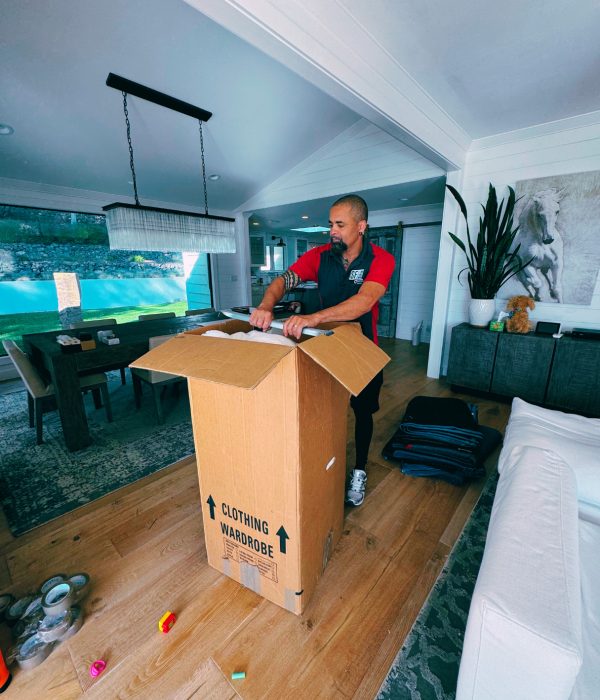
Fragile, upright, heavy, and do-not-stack notes should be visible when boxes are arranged together. Handling labels do not replace proper packing, but they improve communication.
05Number boxes for accountability
A simple room code and number, such as K-01 or BR2-04, lets you count boxes and notice what is missing without creating a complicated spreadsheet.
Frequently asked questions
Should I use colored labels?
Colors can help when they are paired with written room names, since lighting and color perception vary.
Where should labels go?
Place them on the top and at least one side so they remain visible in stacks.
Do movers need a box inventory?
A simple count and room code can help, especially for larger moves, but ask your mover what documentation they use.